Dental Crowns vs. Fillings: Which Restorative Treatment Does Your Tooth Need?
Repair your damaged teeth with expert care at Calaway Dental. Explore the benefits of dental fillings and crowns tailored to your unique needs.
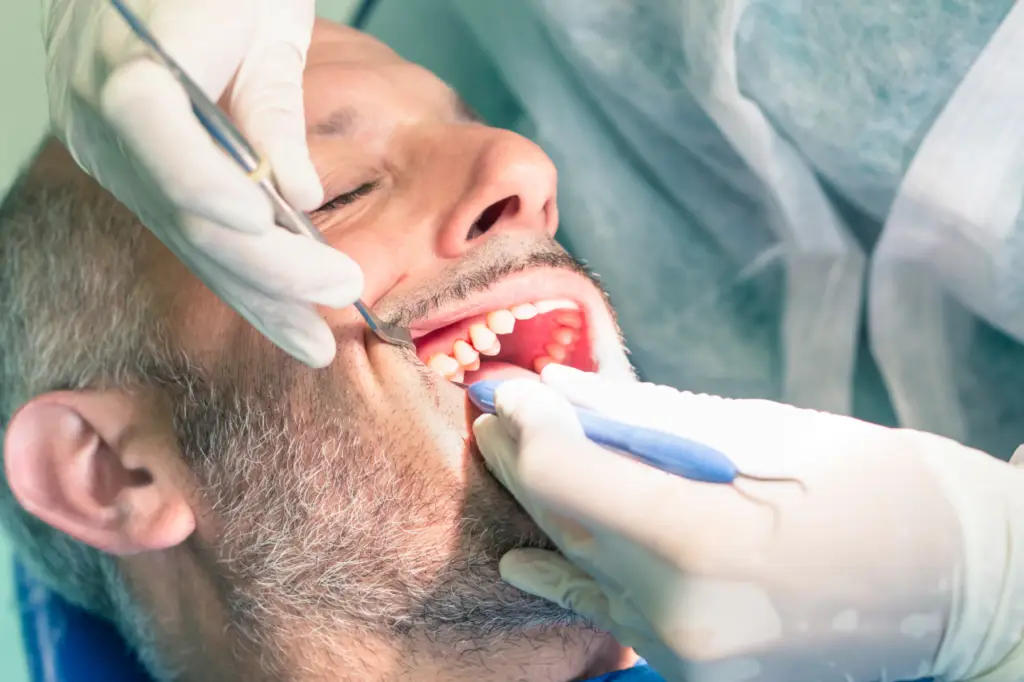
When a tooth is damaged by decay, a crack, or everyday wear, repairing it early can help protect your smile and prevent the problem from becoming more complicated. However, patients are often surprised to learn that there is more than one way to restore a damaged tooth. Two of the most common options are dental fillings and dental crowns, and each serves a different purpose.
At Calaway Dental, restorative dentistry focuses on repairing damaged teeth while preserving healthy tooth structure whenever possible. Whether you need a filling, dental crown, or another restoration depends on factors such as the amount of damage, the location of the tooth, its remaining strength, and your overall oral health.
Understanding the differences between dental crowns and fillings can make a treatment recommendation easier to understand. Although both procedures restore damaged teeth, they accomplish that goal differently. Here is what Phoenix patients should know when comparing dental crowns vs. fillings and deciding which restoration may be appropriate for their smile.
What Is a Dental Filling?
A dental filling is a restoration commonly used to repair a relatively small area of tooth decay or damage. When a cavity develops, the damaged portion of the tooth is removed and the resulting space is restored with filling material.
The purpose of a filling is to restore the tooth’s shape and function while preserving as much healthy natural structure as possible. Rather than covering the entire visible tooth, a filling repairs the specific portion that needs treatment.
Dental fillings can be particularly useful when most of the tooth remains healthy and structurally strong. For example, if a cavity is identified before it has spread through a large portion of the tooth, a filling may provide the support needed without requiring a more extensive restoration.
However, fillings are not appropriate for every damaged tooth. When too much natural structure has been lost, another restorative treatment may provide greater protection.
What Is a Dental Crown?
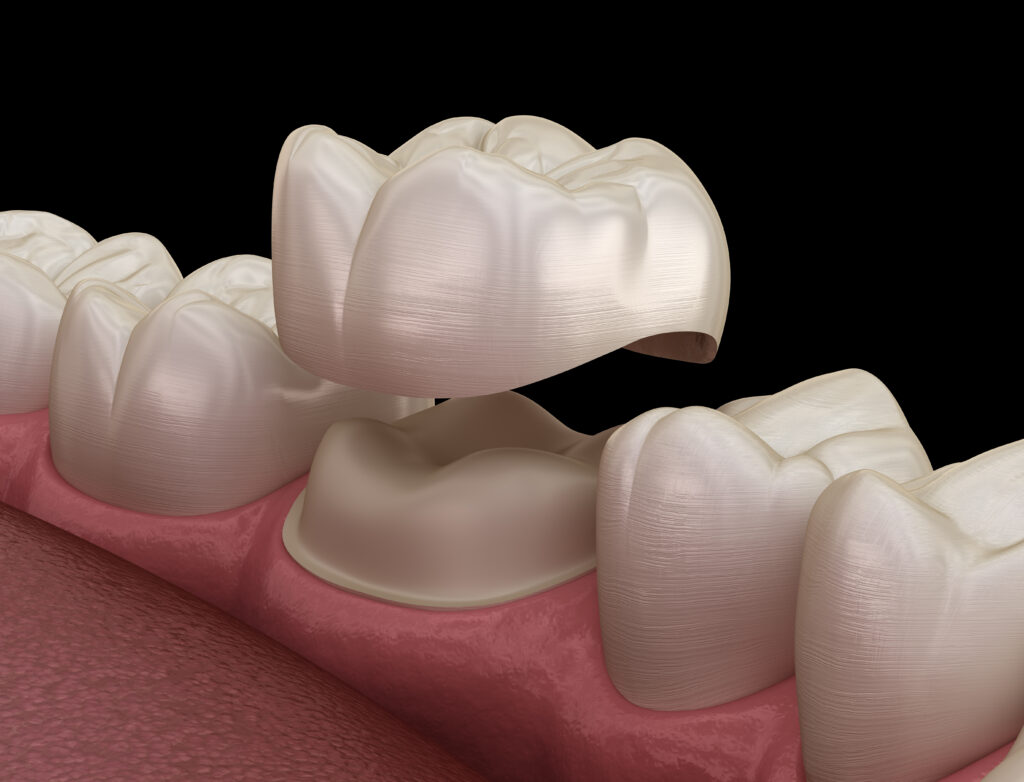
A dental crown is a custom restoration that covers the visible portion of a prepared tooth. You may also hear a crown referred to as a dental cap because it fits over the tooth to restore its shape, strength, and function.
Dental crowns are often recommended when a tooth has experienced more extensive damage than a filling can predictably repair. For example, a large cavity may leave the remaining walls of a tooth too weak to support a substantial filling.
A crown can surround and reinforce the remaining tooth structure, helping it withstand the forces created during biting and chewing.
Crowns may also be recommended for teeth with significant cracks, large existing restorations, substantial wear, or other structural concerns. In addition, a dental crown can be used to restore a tooth following certain procedures or serve as the visible restoration attached to a dental implant.
Dental Crowns vs. Fillings: What Is the Main Difference?
The biggest difference between dental crowns and fillings is the amount of tooth structure they restore and protect.
A filling repairs a specific damaged portion of a tooth. Meanwhile, a dental crown covers most or all of the visible portion of a prepared tooth.
Imagine a back tooth with a small cavity in one area of its chewing surface. If the rest of the tooth remains healthy and strong, removing the decay and placing a filling may be enough to restore normal function.
Now imagine that the same tooth has a very large cavity extending across several surfaces. Once the damaged material is removed, there may not be enough strong tooth structure remaining to reliably support a large filling. In that situation, a dental crown may provide more comprehensive protection.
Therefore, the decision is not simply about choosing the easiest treatment. The goal is to select a restoration that appropriately matches the condition of the tooth.
When Is a Dental Filling Usually Recommended?
Dental fillings are frequently recommended for cavities that have not caused extensive structural damage.
A filling may be considered when:
- A cavity is relatively small or moderate in size
- Most of the natural tooth remains healthy
- The tooth does not have a major fracture
- The remaining structure can support normal chewing forces
- A smaller existing filling needs replacement
- Damage is limited to a specific area of the tooth
Early diagnosis can influence which restorative options are available. Tooth decay generally becomes more extensive when left untreated. As a cavity grows, more natural tooth structure may need to be removed before the tooth can be restored.
Consequently, a tooth that might have required a relatively small filling earlier could eventually need a larger restoration if treatment is delayed.
When Might a Dental Crown Be Recommended?
A dental crown may be appropriate when the tooth needs more protection than a filling can provide.
Situations that may lead to a crown recommendation include:
- Extensive tooth decay
- A large crack or fracture
- A weakened tooth with substantial structure missing
- A very large existing filling
- Significant tooth wear
- A tooth requiring protection after certain dental procedures
- A tooth that needs substantial restoration of its shape or function
In these circumstances, placing another filling may leave weakened sections of the natural tooth exposed to biting forces. A crown can provide broader coverage and support.
However, every tooth should be evaluated individually. A dentist needs to consider the location and extent of the damage before determining whether a crown is appropriate.
How Does a Dentist Choose Between a Crown and a Filling?
The visible size of a cavity is only one part of the decision. Your dentist also evaluates how much healthy tooth structure remains after the damaged portion is removed.
Several factors may influence the recommendation:
- Size and location of the damaged area
- Amount of healthy enamel and dentin remaining
- Presence of cracks or fractures
- Condition of existing restorations
- Location of the tooth in the mouth
- Forces placed on the tooth during chewing
- Teeth grinding or clenching habits
- Condition of the tooth’s internal tissues
- Overall oral health
Dental X-rays or other diagnostic information may also help identify problems that are not fully visible during a surface examination.
Ultimately, the goal is to preserve healthy natural tooth structure while choosing a restoration strong enough to protect the tooth over time.
Benefits of Dental Crowns and Fillings
- Restore teeth affected by decay or structural damage
- Help preserve healthy natural tooth structure
- Restore normal tooth shape and chewing function
- Provide treatment options for different levels of tooth damage
- Can improve comfort when a damaged tooth is causing symptoms
- Help protect weakened areas from additional damage
- Can restore the appearance of damaged teeth
- Support long-term oral function with proper care
- Allow restorative treatment to be customized for each tooth
- May help patients preserve natural teeth rather than allowing damage to progress
Does Getting a Crown Require More Tooth Preparation?
Generally, a dental crown requires more preparation than a filling because the restoration must fit securely over the tooth.
When placing a filling, the dentist removes the affected area and restores that portion of the tooth. Healthy surrounding structure can usually remain largely intact.
For a crown, the tooth needs to be carefully shaped so that the restoration can fit properly while maintaining an appropriate relationship with neighboring and opposing teeth.
This does not mean a crown is unnecessarily aggressive when it is recommended. If a tooth has already lost substantial structure, broader coverage may be necessary to protect what remains.
The most conservative treatment is not automatically the smallest restoration. Instead, it is the treatment that appropriately preserves and protects the natural tooth based on its current condition.
Do Dental Crowns and Fillings Look Natural?
Modern restorative dentistry considers appearance as well as function.
Tooth-colored filling materials can be selected to blend with surrounding enamel, helping the repaired area appear more natural. This can be particularly valuable for restorations that are visible when smiling or speaking.
Dental crowns can also be customized to complement surrounding teeth. Their shape, size, proportions, and shade can be considered when designing the restoration.
However, appearance should not be evaluated separately from function. A successful restoration also needs to fit properly, support an appropriate bite, and withstand everyday chewing forces.
Ideally, restorative dentistry should help a damaged tooth look natural while allowing it to function comfortably.
Can a Large Filling Weaken a Tooth?
A filling does not automatically weaken a tooth. However, the amount of natural tooth structure remaining around a large restoration can affect overall strength.
Consider a molar that has undergone several fillings over many years. Each time damaged or decayed structure requires removal, less natural tooth may remain.
Eventually, the walls surrounding a large filling can become relatively thin. Those areas may experience significant pressure every time the patient bites or chews.
If the remaining tooth is no longer strong enough to reliably support another filling, a dental crown may be recommended to provide more extensive coverage.
This is why the percentage of the tooth occupied by a restoration can matter when determining future treatment.
Can a Filling Eventually Need to Be Replaced With a Crown?
Yes. A tooth that initially received a filling may require a crown later in life.
This does not necessarily mean the original filling was unsuccessful or that the wrong treatment was chosen. Teeth and restorations experience years of chewing pressure, temperature changes, and normal wear.
In addition, new decay can sometimes develop around an older restoration. A filling itself may also wear, chip, or require replacement over time.
If repeated treatment leaves less healthy tooth structure available, another filling may no longer provide adequate protection. A crown can then become the more appropriate restorative option.
Routine examinations allow your dentist to monitor older restorations and identify changes before a tooth experiences a more significant fracture or other complication.
What Happens If You Delay Restorative Treatment?
A damaged or decayed tooth typically does not repair itself.
If decay is present, bacteria can continue affecting deeper portions of the tooth. Meanwhile, a crack can become larger as normal chewing repeatedly places pressure on the weakened structure.
As the problem progresses, symptoms may become more noticeable. Patients may experience sensitivity to temperature, discomfort when chewing, spontaneous pain, or tenderness around the affected tooth.
Eventually, damage can reach the inner tissues of the tooth and require more extensive treatment. In severe cases, a tooth may become difficult or impossible to restore predictably.
Addressing problems earlier can help preserve treatment options and protect more of the natural tooth.
How Long Do Dental Crowns and Fillings Last?
Both dental crowns and fillings are designed to be durable, but no dental restoration should be expected to last forever.
Longevity varies according to the restoration, tooth, oral hygiene habits, bite forces, and overall oral health.
Factors that can influence how long a restoration lasts include:
- The size and location of the restoration
- The amount of natural tooth structure remaining
- Daily brushing and flossing
- Regular professional dental care
- Grinding or clenching
- Chewing habits
- Dietary habits
- Changes in the surrounding tooth over time
Regular dental examinations are important even when a crown or filling feels completely normal. Your dentist can examine the restoration and surrounding tooth for signs of wear, damage, or new decay.
Identifying these changes early may make treatment simpler and help extend the useful life of the restored tooth.
How Can You Protect Your Crown or Filling?
Restored teeth require the same commitment to oral hygiene as untreated natural teeth.
Brush twice each day and clean between your teeth regularly. Pay attention to areas where a filling or crown meets natural tooth structure because plaque can accumulate around restoration margins.
In addition, avoid using your teeth to perform tasks they were never designed to handle. Opening packages, biting pens, chewing ice, or placing unnecessary pressure on hard objects can damage natural teeth and restorations.
If you grind or clench your teeth, mention it during your dental appointments. Repeated excessive forces can contribute to wear, cracks, and restoration damage. Depending on your situation, your dentist may recommend strategies for protecting your teeth.
Finally, maintain regular examinations and professional cleanings. Preventive visits allow both natural teeth and existing dental work to be monitored over time.
What If Your Crown or Filling Breaks?
A damaged restoration should be evaluated rather than ignored. Even if the tooth does not hurt immediately, a broken or missing restoration can leave natural tooth structure vulnerable.
If a filling chips or falls out, avoid chewing heavily on that side until the tooth can be examined. Likewise, if a crown becomes loose or comes off, contact the dental office for guidance.
Do not assume that a crown can simply be permanently reattached at home. The underlying tooth needs to be evaluated because the restoration may have loosened due to decay, structural changes, or another dental concern.
If the damaged restoration is accompanied by severe pain, swelling, significant trauma, or other urgent symptoms, let the dental office know when you call so the appropriate level of care can be determined.
Which Treatment Is Better, a Dental Crown or a Filling?
Neither treatment is universally better. The appropriate restoration depends on what the tooth needs.
A filling may be an excellent solution for a relatively small area of decay when the surrounding tooth remains strong. Meanwhile, a dental crown may be a better option for a tooth that has lost substantial structure or requires broader protection.
Choosing between dental crowns vs. fillings is therefore less about personal preference and more about matching the treatment to the condition of the tooth.
A comprehensive dental examination can determine how much damage is present, whether the tooth has cracks, and how much healthy structure remains. From there, your dentist can recommend a treatment designed to restore function while preserving your natural smile whenever possible.
Restoring a Damaged Tooth in Phoenix
Dental problems are often easier to address when they are identified before extensive damage develops. A small cavity may be treatable with a filling, while a weakened or heavily damaged tooth may require the added protection of a dental crown.
Understanding the difference between these restorations can help you feel more confident when discussing treatment. Fillings focus on repairing localized damage, while crowns provide broader coverage when a tooth needs additional structural support.
Most importantly, treatment should be personalized. The condition of the tooth, your bite, existing dental work, oral health, and long-term needs all play a role in deciding which restoration is appropriate.
If you have a cavity, cracked tooth, damaged filling, or older restoration that needs attention, Calaway Dental can help you explore your restorative dentistry options in Phoenix. Call 602-955-7788 or Contact Us to book an appointment with Calaway Dental at 2111 E Highland Ave. STE B-105, Phoenix, AZ 85016.
Ready for a personal answer?
Online education is helpful, but it cannot replace an individual examination. Schedule a consultation or call the practice to discuss your next step.
Schedule onlineGood decisions start
with clear answers.
 Read post ↗Emergency Dentistry ·
 Same-Day Emergency Dentist in Phoenix, AZ: When You Should Seek Immediate Care
 Read post ↗General Dentistry ·
 Same-Day Dental Crowns in Phoenix, AZ: Restore Your Tooth in One Visit
 Read post ↗General Dentistry ·